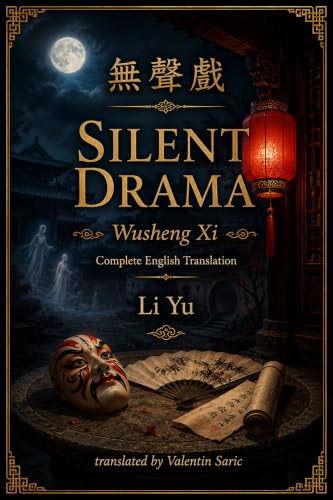
Silent Drama
A Complete English Translation of Li Yu’s Classic Qing Dynasty Story Collection
Beauty, marriage, deception, desire, karma, ghosts, clever women, foolish men - and the strange comedy of human fate.
Silent Drama (無聲戲) is one of the remarkable works of Li Yu, the great seventeenth-century Chinese writer, dramatist, critic, and storyteller. Written in the lively tradition of late Ming and early Qing vernacular fiction, this collection turns domestic life into a stage where every marriage, mistake, disguise, and supernatural twist reveals something sharp about society and the human heart.
About the Book
Unlike grand battlefield epics or courtly romances, Silent Drama looks closely at intimate human situations: mismatched marriages, jealousy, social pressure, gender expectations, moral reversals, erotic temptation, family conflict, and the strange punishments or rewards that fate seems to invent.
The opening tale famously explores the misery of a beautiful woman married to an ugly husband, using dark comedy and moral reflection to examine beauty, compatibility, and the unfair burdens placed upon women. Other stories move through comic intrigue, supernatural justice, mistaken identity, clever schemes, gambling debts, gender transformation, household conflict, and the fragile line between reputation and ruin.
The Chinese Text Project identifies 無聲戲 as a Qing huaben fiction work by Li Yu, traditionally arranged in twelve chapters and also known under related titles such as Liancheng Bi and Jueshi Mingyan Liancheng Bi. ([Chinese Text Project][1])
About This Edition
This edition presents Silent Drama in a complete English translation by Valentin Saric, prepared for modern readers who want direct access to classic Chinese fiction in a clear and readable form.
The goal of this edition is to preserve the flavor of Li Yu’s storytelling - its irony, theatricality, moral wit, social observation, and sudden turns of fate - while making the text accessible to readers discovering this work for the first time.
Themes & Legacy
Li Yu’s fiction is playful, sharp, and theatrical. His stories often feel like miniature dramas: characters are placed in morally charged situations, then forced to reveal their vanity, cleverness, weakness, desire, or resilience.
The recurring themes include:
marriage and incompatibility
beauty, ugliness, and social judgment
women’s limited choices in traditional society
comic reversals and moral punishment
desire, deception, and reputation
ghosts, karmic justice, and supernatural irony
the household as a stage of human comedy
At a glance
About the series
Rediscover the great epics, mysteries and chronicles of dynastic China: gods and generals, swindlers and scholars, courtesans, ghosts and emperors, in complete English translations.